Export orders rarely fail because someone is unprofessional. They fail because handovers between stages are missing. We split a full delivery into three stages, each with defined deliverables, a named approver and a time anchor, so both sides always know where the project stands and who moves next.
Stage 1 — sampling, where uncertainty gets closed out
Sampling has to answer three questions: can the structure be filled, does it look the way the client imagines, and is the formula compatible with the material. We ask clients to run a filling test with their own formula, especially for high-activity or high-viscosity products — a paper-based compatibility claim cannot replace a physical trial.
This stage usually carries the structural discussion of an
OEM/ODM Airless Bottle project: the client brings a concept sketch or a competitor sample, we assess feasibility and propose tooling and lead time. Where the shape already exists and only color or decoration changes, sampling compresses sharply. Where new tooling is needed, budget the time properly — tooling is the one step that cannot be shortened.
Stage 2 — mass production, where consistency gets locked in
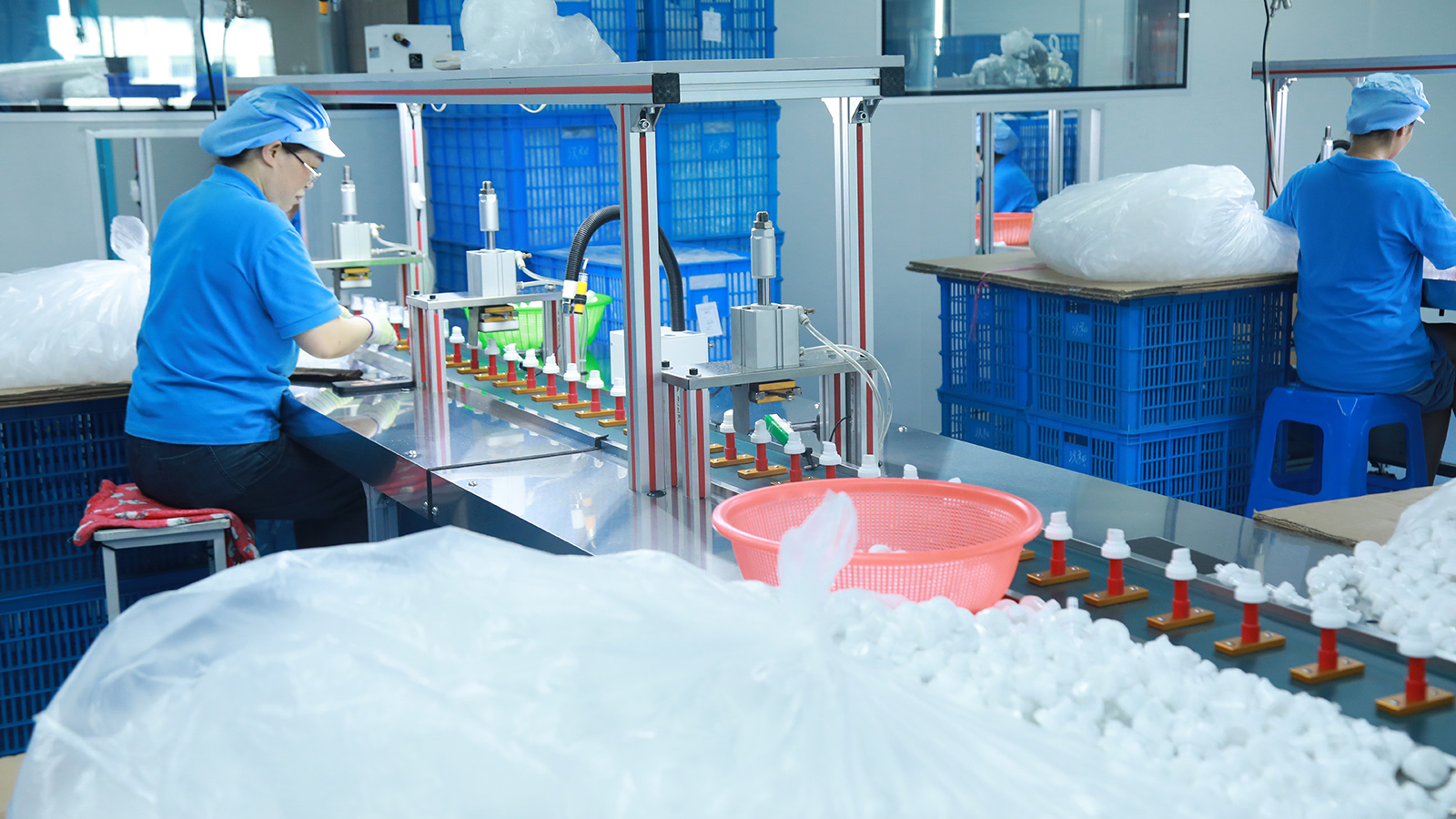
The metric here is not "can we make it" but "is every batch identical." Color consistency, print adhesion, pump torque and vacuum retention must hold from first piece to last. We confirm color chips, AQL and residual-rate ceilings before the run starts, which moves acceptance criteria upstream.
For structures with a refill core, such as
Plastic Refillable Pump Bottles and the
Replaceable Airless Bottle, mass production also has to validate insertion and removal force: too loose and the core works free in transit, too tight and the shopper thinks the product is broken. These tactile specs cannot be drawn; they can only be confirmed on samples, repeatedly.
Stage 3 — shipment, where time becomes certainty
The factory sits close to Ningbo Port, so both FCL and LCL consolidation are workable. Our experience is that pushing booking, loading and customs declaration into the same week materially reduces rollover and demurrage risk. Cartons are packed separately by body, overcap and pump, with gross weight held at 9.7kg–16.8kg for easier deconsolidation at overseas warehouses.
For rotary formats such as the
Rotary Airless Pump Bottle, we run a 100 percent rotation-function check before loading, because a failed rotation mechanism usually surfaces only after packing, when rework is expensive.